
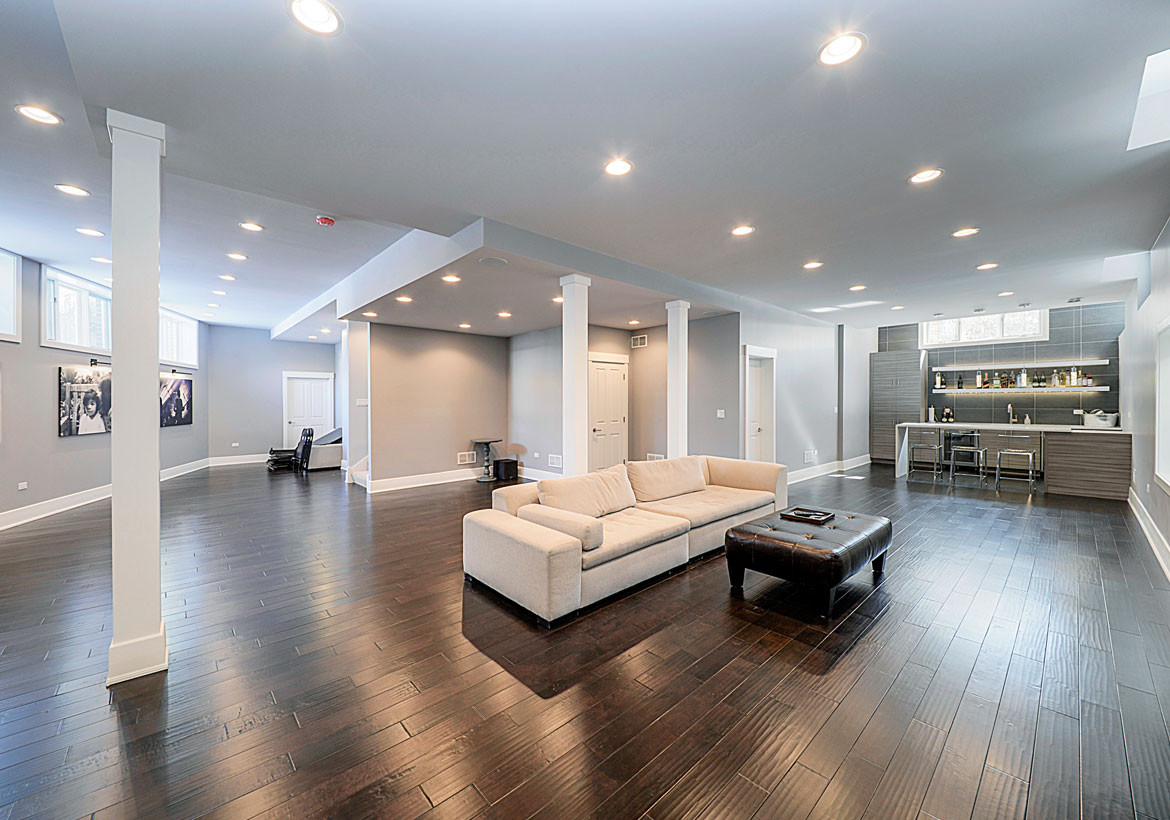
In Chicago, once-forgotten lower levels are becoming the most exciting square footage in the house. Luxury basement finishing in Chicago blends smart planning, resilient construction, and elegant design to turn basements into places people actually want to spend time. Think theaters, wellness suites, speakeasy-style bars, and flexible rooms that shift from work to play. Done right, these projects increase livability today and buyer appeal tomorrow, important in a city where weather, building codes, and lot sizes require creative solutions. Here’s how homeowners are reimagining the space beneath their feet, and why it’s paying off.
For expert insight on fixtures, layouts, and design integrations, explore the latest trends in Bathroom Equipment for Chicago’s next generation of luxury basements.
Transforming basements into multi-functional living areas
A luxury basement does far more than serve a single purpose — it becomes a multi-functional extension of the home. Across Chicago, homeowners are creating zoned lower levels that seamlessly blend work, relaxation, and entertainment. Picture a lounge that flows into a bar, a quiet office that doubles as a guest suite, or a kids’ play area designed alongside concealed storage. The design focus is on flow, sound control, and flexibility.
Smart layouts group noisy spaces — such as theaters, game rooms, and gyms — away from quiet areas like offices and guest bedrooms. Sliding steel-and-glass partitions or pocket doors maintain an open feel while offering acoustic privacy when needed. Built-in benches, under-stair drawers, and custom storage walls help manage clutter, keeping the finished space intentional and streamlined.
Comfort engineering also plays a major role. HVAC zoning or dedicated mini-splits ensure steady temperatures year-round, while dehumidification systems maintain air freshness. Thoughtful airflow design prevents stagnant zones, and egress planning ensures code compliance and safety—especially where sleeping areas are included.
For a refined, cohesive finish, designers increasingly turn to premium flooring and wall materials like Majestic Tiles, known for their durability, water resistance, and timeless aesthetic. Whether mimicking natural stone, marble, or hardwood, these tiles elevate basement spaces with a luxurious, cohesive look that complements modern design.
The result is a lower level that feels like a natural continuation of the main floors—quiet, comfortable, and beautifully tailored to how people actually live today.
For design inspiration and material options, explore the latest from Majestic Tiles.
Popular design ideas from theaters to home gyms
The wish list is broad, but a few concepts dominate luxury basement finishing in Chicago:
- Private cinema: Acoustically isolated walls, staggered studs, mineral wool insulation, and resilient channels create a quiet envelope. A 7.1.4 Dolby Atmos layout, acoustical panels, and a masked projection screen deliver the wow. Starry ceilings and LED step lights add drama without glare.
- Golf simulator: Many Chicago homeowners squeeze in a sim bay with about 16 ft width, 20 ft depth, and 10 ft ceiling where feasible: soft-tile floors, impact screens, and blackout control make practice realistic.
- Fitness studio: Rubber flooring, wall mirrors, dedicated ventilation, and storage for bands and weights keep workouts safe and seamless. Add a sauna or steam shower for spa-level recovery.
- Speakeasy bar and lounge: Fluted millwork, moody plaster, underlit shelves, and an ice maker that can keep up on game night. A nearby wine room with proper cooling (around 55°F and 60–70% humidity) turns a collection into a feature.
- Playroom that grows up: Durable finishes now: hidden desk niches and assignments nooks later. Magnetic walls and built-in cubbies keep toys in line.
- Home office or studio: Quiet doors, enhanced sound isolation, and layered task lighting make remote work, or recording and crafting, actually pleasant.
- Guest suite: En suite bath, code-compliant egress, and a hospitality corner with coffee and a mini-fridge.
Laundry upgrades, pet-wash stations, and mudroom-style landings near the exterior stair are common add-ons that make day-to-day life simpler.
Importance of waterproofing and structural preparation
Chicago’s climate and clay soils make waterproofing non-negotiable. Before any finish goes in, the envelope needs a plan that typically includes interior drain tile tied to a sump with a battery backup, a reliable check valve or flood-control system, and crack injection where needed. Exterior solutions, grading adjustments, downspout extensions, or exterior membranes, may be added depending on site conditions.
Inside, continuous vapor barriers, sealed slab penetrations, and closed-cell spray foam at rim joists help control moisture and improve comfort. A whole-home or dedicated dehumidifier keeps relative humidity in the sweet spot.
Structural readiness matters just as much. Basements often need steel post adjustments, new beams, or floor leveling. If ceiling height is tight, strategies like low-profile ducts, re-routed plumbing, or selective slab recesses (where feasible and engineered) can reclaim inches. Radon testing is standard practice in Illinois: if levels are elevated, mitigation is usually integrated before finishes. Permitting under the Chicago Building Code, including egress compliance for bedrooms and required smoke/CO detection, protects both safety and resale value.
Lighting strategies to brighten lower-level spaces
Great basement lighting mixes natural and artificial light thoughtfully. Where possible, larger window wells, glass doors, and reflective surfaces bounce daylight deep into the plan. From there, layered lighting does the heavy lifting.
- Ambient: Canless 4 in LEDs spaced to avoid scalloping and glare, typically at warm 2700–3000K with CRI 90+ for natural skin tones.
- Task: Pendants over the bar, under-cabinet LEDs, reading sconces by the lounge, and mirror-integrated lights in the gym or bath.
- Accent: Wall washers on art, cove lighting for theaters, toe-kick lights along steps and built-ins to add depth.
Smart dimming and scene control (Lutron, Control4, or similar) make transitions instant, movie mode, workout, cleanup. The aim is a bright, inviting feel without the harsh downlight-only effect that can make basements look flat.
High-quality finishes that enhance basement appeal
Luxury doesn’t mean precious: it means materials that look better longer. Floors see the most stress, so designers lean on large-format porcelain, high-end LVP, or engineered white oak over radiant heat for comfort. In spa zones and entries, heated porcelain or stone tile is durable and season-proof.
Walls come alive with limewash, Venetian plaster, or textural wallpapers balanced by acoustic panels in theaters and studios. Built-ins in rift-sawn white oak or walnut add warmth and hide storage. Quartz and quartzite counters handle parties without babying: unlacquered brass or matte black hardware patinas gracefully.
Solid-core doors, soft-close hardware, and quiet bath fans elevate the experience. Linear gas or electric fireplaces with art lighting above create a focal moment that feels as intentional as any living room upstairs.
Value-added benefits of luxury basement projects
Beyond the lifestyle upgrade, finished basements add tangible value. Expanding conditioned, code-compliant square footage boosts buyer interest, especially in neighborhoods where footprints are fixed and lot sizes are tight. Well-executed projects in Chicago often recoup a significant portion of costs, commonly cited ranges are about 60–75%, with premium designs and amenities pushing perceived value even higher.
There are ongoing benefits, too. Better insulation and air sealing improve energy efficiency. Flood-resilient assemblies and backup power on sump systems reduce risk. Flexible spaces adapt as needs change, from playrooms to teen lounges to in-law suites, so households can stay put longer.
Where allowed by local rules, some owners explore accessory dwelling use for a compliant basement apartment: others create an ideal guest suite for extended stays. Either way, the investment tends to pay back in daily enjoyment well before resale.