
There is a particular moment every Minnesota household knows. The first morning the thermometer slips below zero, the furnace runs nonstop, the cord to the car’s block heater stiffens like a garden hose left out overnight, and the breaker panel in the basement starts carrying more than it did all of October. Winter is when that panel works hardest.
Electricians who work the western suburbs see the same pattern every year. Calls climb as soon as the cold settles in, and a good share of the work handled by licensed, locally owned crews such as Gray Duck Electric in Eden Prairie involves panel upgrades, repairs, lighting and new wiring that homeowners wish they had scheduled back in September. Knowing how winter loads pile up, month after month, makes it far easier to plan that work before the deep freeze instead of during it.
The Cord Running to the Front Bumper
Winter’s electrical story usually starts in the garage. An engine block heater can draw anywhere from about 400 to well over 1,000 watts, and many garages feed that outlet from the same circuit as the door opener, a chest freezer and the overhead lights. Older garages may lack ground fault protection entirely.
Cold also changes the cord itself. Cheap vinyl jackets turn brittle in subzero air, crack where they bend over the bumper and let moisture reach the conductors. A heavy gauge, outdoor rated cord that stays flexible in the cold is worth the extra few dollars. So is a simple outdoor timer, since most engines only need a few hours of warming before a morning start.
Anyone planning a 240 volt garage heater should treat it as its own project. Those units need a dedicated circuit sized to the heater, not a spare outlet and a lucky breaker.
Twinkle Lights and Tired Outlets
December brings a different kind of load. Outdoor outlets that sat untouched all summer suddenly power roofline strings, lit wreaths and inflatable snowmen with fans humming inside them. Snow melts around plugs during the day and refreezes at night, which is exactly when ground fault outlets start tripping.
An in use cover, sometimes called a bubble cover, keeps the outlet shielded even while a cord is plugged in. LED light strings draw a small fraction of the power older incandescent sets used, but plenty of families still mix in strands from years past. Connecting more incandescent strings end to end than the packaging allows is one of the most common ways a holiday display overheats a connection.
Deep Cold Puts Every Circuit on Overtime
January is the true stress test. A typical portable space heater pulls 1,500 watts, which works out to roughly 12.5 amps. A standard 15 amp bedroom circuit is meant to carry only about 12 amps continuously, so a single heater sharing that circuit with a television and a lamp is already past a comfortable limit. The Electrical Safety Foundation International warns against plugging space heaters into extension cords and recommends keeping anything that can burn at least three feet away from them.
Heat pumps add another layer. Cold climate models have become popular across Minnesota, and they handle far lower temperatures than older units did. When the air drops deep enough, though, many systems lean on backup electric resistance strips. A 10 kilowatt strip heater draws around 40 amps at 240 volts, and it tends to switch on during the very same hours everyone else in the house is cooking, showering and doing laundry.
Electric vehicles stretch things further still. A Level 2 charger usually sits on a 40 to 60 amp circuit, and cold batteries take longer to charge while preconditioning the cabin draws even more. Put a heat pump’s backup strips, an EV charger, an electric dryer and a holiday oven together on a 100 amp panel and the math stops working. Strained circuits usually show it.
- Lights dim or flicker the moment a space heater, dryer or heat pump backup kicks on.
- An outlet cover or plug feels warm to the touch after a heater has been running for a while.
- The same breaker trips around the same time each evening, usually when the household is busiest.
- A faint buzzing comes from a switch, an outlet or the panel itself.
- An outlet looks discolored or a faint smell of hot plastic lingers near it, which calls for shutting that circuit off and getting it inspected.
Ice on the Lines and a Generator in the Driveway
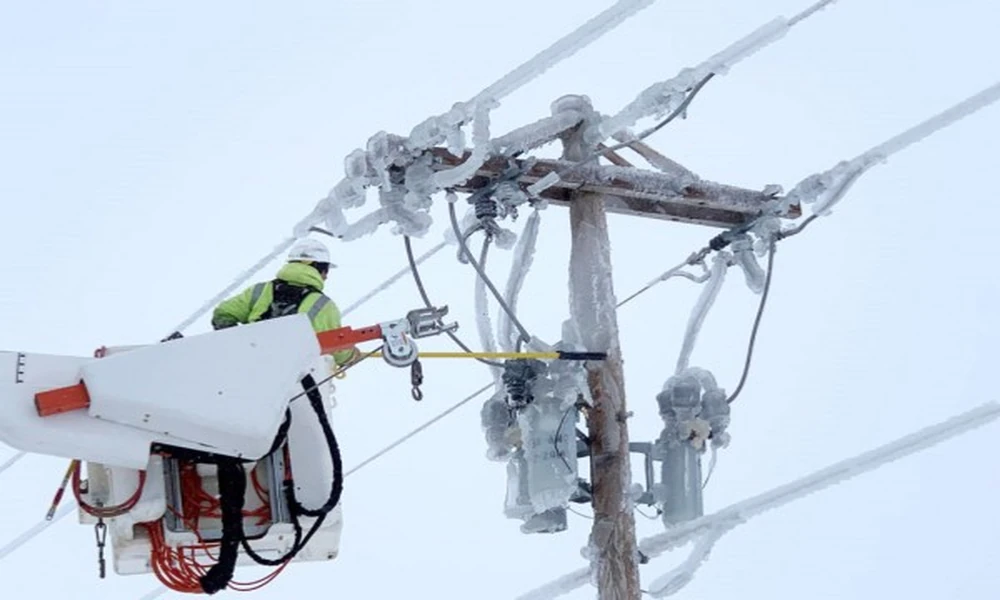
Late winter storms often bring heavy, wet snow and ice that snap branches onto power lines. Outages in that weather turn into a scramble for portable generators, and that is where some of the most dangerous wiring shortcuts happen.
Plugging a generator into a dryer outlet with a homemade double male cord can send power backward through the utility lines and endanger the crews working to restore them. The safe route is a transfer switch or a panel interlock installed under permit, which lets a homeowner choose which circuits run during an outage. The furnace blower, the sump pump, the refrigerator and a few lights usually top that list. The generator itself belongs outdoors, well away from windows and doors, with working carbon monoxide alarms inside.
Meltwater Finds the Low Spots
Thaw season feels like relief, yet it brings its own electrical headaches. Ice dams push meltwater under shingles and into soffits, where it can drip straight into the boxes behind exterior light fixtures. Heat cable strung along roof edges needs ground fault protection, and it deserves a careful look each spring for crushed or scorched sections before anyone forgets it is still plugged in.
Basements get tested too. Sump pumps start cycling hard as snow melts, and a pump on a shared circuit can lose power when another device trips the breaker. Newer electrical codes call for ground fault protection on basement outlets, so a dedicated circuit for the pump along with a battery backup or high water alarm keeps a nuisance trip from becoming a flooded floor. Outdoor outlets deserve a look once the snow pulls back, since water and corrosion hide behind covers.
Doing the Math Before the Mercury Drops
Winter loads become trouble when they stack on a panel that was sized for a different decade. A load calculation done by a licensed electrician compares what a home actually uses on its coldest, busiest evening against what the service can safely deliver. That number decides whether a garage heater, an EV charger or a heat pump can be added as is, or whether a panel upgrade belongs first.
Minnesota requires permits and inspections for most electrical work, and that inspection is part of what makes an upgrade trustworthy rather than just functional. Late summer and early fall remain the best window for this kind of planning. A simple walk through the house, listing every device that plugs in once the cold arrives, gives that conversation a real starting point. By the time the next zero degree morning rolls around, the cord to the front bumper should be the only thing in the garage that feels any strain.