
Introduction
Commercial paving projects are essential for businesses that require durable and well-maintained surfaces for parking lots, driveways, and access roads. However, these projects can become costly if they are not properly planned and managed. Business owners and property managers often look for solutions that balance affordability with long-term performance. By focusing on careful planning, selecting the right materials, and applying preventive maintenance strategies, it is possible to reduce overall expenses without compromising quality. cost-effective asphalt paving solutions help ensure long-lasting results while keeping project and maintenance costs under control.
Proper Planning and Site Preparation.
Proper planning is one of the most significant measures in the process of cost control. The site must be reviewed properly before the construction process commences so as to ascertain the stability of the soil, the drainage needs and the anticipated traffic congestion. With good site preparation, the pavement will be strong in terms of foundation and this will minimise the chances of cracks and structural damage in future. A properly laid base layer enhances long life and eliminates expensive repairs at the later stages of the pavement life.
Selecting the Appropriate Paving Material.
The other important aspect of project cost management is to choose the right paving material. The use of asphalt on commercial paving is usually due to its durability, flexibility and the fact that it is relatively cheaper compared to other paving materials. Most organisations and agencies such as the National Asphalt Pavement Association emphasize the importance of asphalt as a relatively inexpensive building material, as it is not very expensive to install and is most importantly, easy to maintain. Repairs on asphalt surfaces are also fast and this lowers the cost of maintenance expenses in the long run.
Introducing Preventive Maintenance.
Preventive maintenance is a significant factor that makes commercial paving projects cost-efficient. Frequent maintenance, sealing of the cracks and cleaning of the surfaces are used to prevent damage to the pavement due to water, traffic and the environment. Minor maintenance issues done at the appropriate time can save the occurrence of bigger issues. This will save the cost of having to carry out costly resurfacing or reconstruction works.
Ensuring Proper Drainage
One of the primary agents of pavement deterioration is water. When it is not drained, the water will either collect at the top or get into the underlying layers, which will make the pavement weak. Effective drainage systems should also be installed to channel water off paved surfaces. Clear drainage systems and ensuring appropriate slopes help to prevent the pavement from long-term damage and help to decrease the expenses of the repair.
https://www.youtube.com/watch?v=zI0HUOc9FuA
Employing Building Materials with Efficiency.
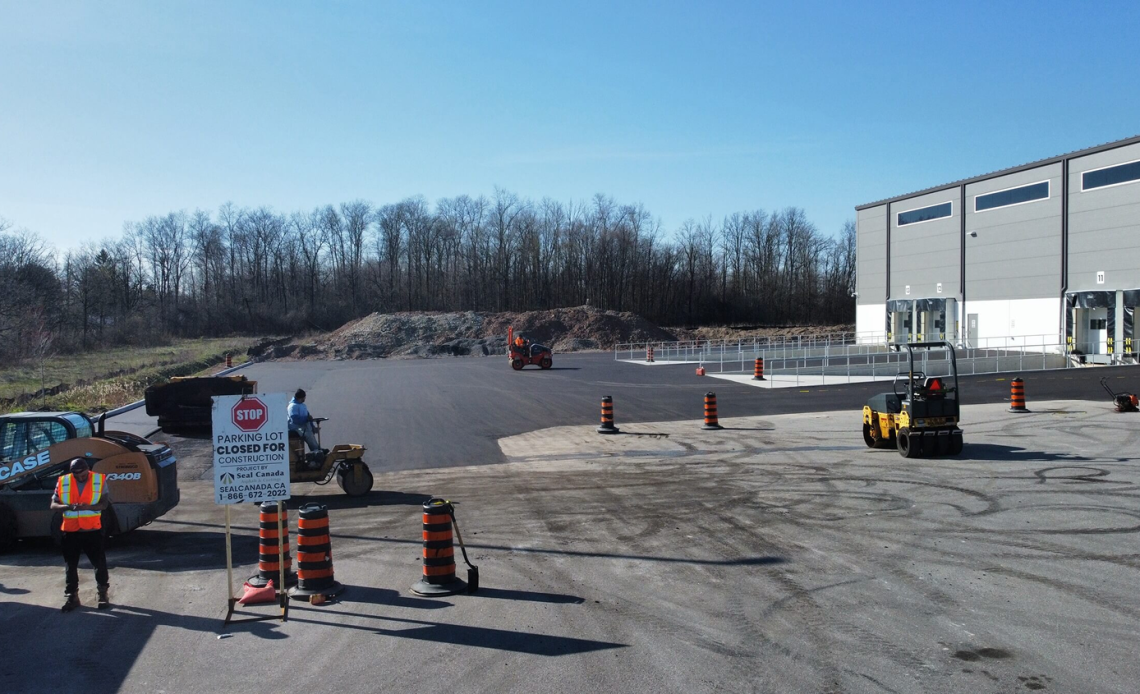
Pavement technologies and building methods of the modern world will also be able to contribute to the cost reduction of projects. Optimal machinery and better paving techniques enable the contractors to cover projects at a faster rate and achieve quality results. The city of Houston has had its share of large infrastructure projects which are usually handled by the use of advanced paving equipment and planning techniques to ensure that the expenses are controlled whilst dealing with massive road and parking constructions.
Arranging Periodical Inspections.
Regular checks enable property managers to check the condition of paved surfaces and solve issues at an early stage. Inspection of cracks, potholes, and drainage problems will help to make sure that the maintenance will be finished before the pavement deteriorates further. Frequent monitoring prevents the money invested in the paving project and assists in prolonging the life of the surface.