
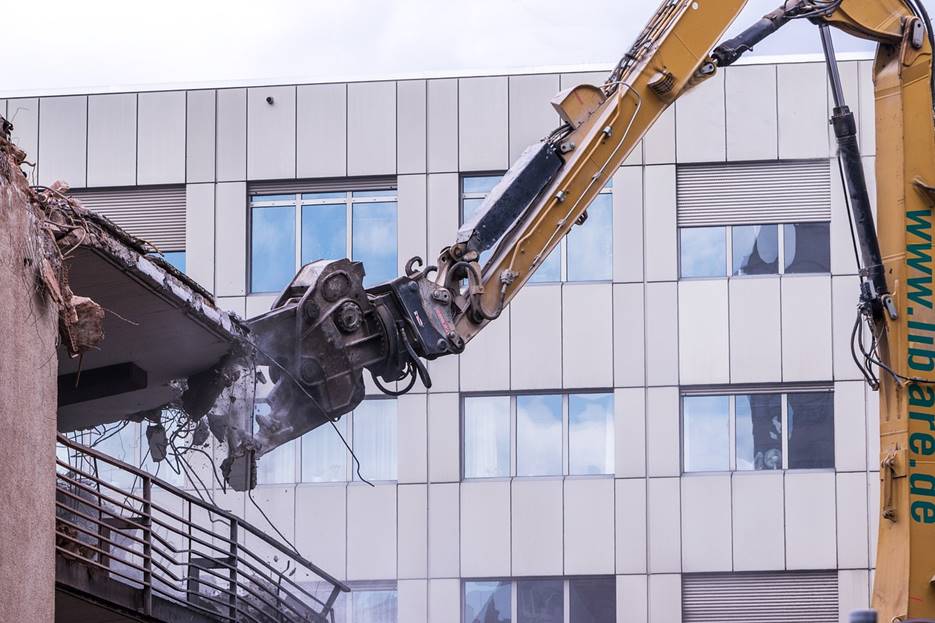
A commercial demolition is a complex process involving engineering, safety and logistics; understanding what a commercial demolition is will be useful for owner and managers, prior to getting anywhere near the first wall. This article will provide some education with a few processes and timeframes and who has the responsibility for what part of the process.
Pre-Demolition Planning
All jobs start with planning; each and every contractor will assess the site, reviewing records for the building, recognizing structural systems and utilities, determining whether specific parts of the structure will be salvaged using selective demolition to reduce costs and waste. If the next steps of the project involve grading or trenching, the contractor will also schedule that work, making a site-specific timeline to retain excavation services or any other site work.
Before any equipment has arrived, the demolition contractor will identify access routes, staging area, and communicate with the owner and nearby tenants. By having clearly defined responsibilities, a timeline can be developed that meets stated milestones, is compliant and creates minimal impact, disruption to existing business.
- Deliver a concise, detailed scope of work: You cannot underestimate the value of a scope of work and with the level of detail: Type of demolition methodology (mechanical, high reach or deconstruction), hours of operation, site access and traffic routes, site control plans.
- Run a hazards survey to check for asbestos, lead paint, PCBs and any other regulated materials that require special handling. Check EPA guidelines here: https://www.epa.gov/asbestos
- Provide letter documentation of utility locates and shut offs (water/gas/electric/telecom) from respective service providers.
- A salvage and recycling plan listing building materials: e.g. steel, concrete, fixtures, that a developer may be able to recover at lesser disposal facility fees or can be salvaged to utilize.
Traffic and Safety Concerns
Safety is at the core of each of these operations. Actually, demolition contractors’ schedules can have an impact on customers movement and scheduled events, as using debris transportation routes and lane closures can affect businesses adjacent to demolition sites. For busy corridors or downtown parcels, the contractor may suggest off-shift or weekend work to minimize disruptions. During a commercial building demolition King of Prussia, for instance, it is common for the planners to work with local talent to time deliveries or schedule flaggers to accommodate the morning or evening rush.
Pedestrian protection is provided by a combination of fencing, covered walkways, and signage, while dust control is done by water spray or misting cannons and noise is tracked and log by the demolition contractor to comply with local ordinance. Once the operators are on the other side of the site fencing, spotters will direct theirs, exclusion zones will be identified, and daily toolbox talks will go over all sequence/procedural steps. Owners should expect incident reporting processes, a site-specific safety plan, updated as conditions change.
How Permits Work

Permitting is the way the jurisdiction checks that the demolition work complies with building codes, environmental regulations, and any public-right-of-way. The demolition contractor will typically pull the main demolition permit in standalone jurisdictions while co-coordinating the utility disconnect letters and any street use permits on behalf of the owner when required. Timelines will change from scope and development agencies to an approved permit; however, organizational coordination of each step will fast track approvals.
Along with the consolidated report, the owner will be given a checklist of submittals and inspection points that are necessary to allow the project to proceed. A good contractor will provide effective and clear communication or representations of all of these milestones up front so that you have capacity on financing, lease exits, and construction starts on time.
- Standard submittals from local jurisdictions may include a demolition permit, an erosion and sediment control plan, and right-of-way or traffic control permits, if the project impacts sidewalk or lanes.
- The utility shut off and hazardous materials clearances must be identified and will not be filed until you are ready for structure to begin.
- Inspectors may request pre-demo walk-throughs and interim phase inspections (such as dust control and fencing) and a final closeout inspection if required in order to ensure site stabilization.
Waste Management on Large Sites
Commercial demolitions can produce thousands of tons of material. An effective debris removal and construction debris hauling plan maintains compliance as well as a clean site. Concrete and masonry are often crushed to be reused as base; metals find their way to scrap markets; wood and fixtures may be salvaged; and regulated waste can follow chain-of-custody requirements. Properly labelled dumpsters and on-site education will reduce contaminants, ensuring that recycling goals can be reached. For additional resources, click this site.
To put into local context hauling and disposal logistics for construction waste, here’s a nearby reference usually used for routing planning drop-offs:
Responsible contractors track tonnage and diversion rates, and share this information at closeout for their own, and clients’, sustainability goals and future audits. Additionally, they plan site stabilization for after the last load has gone but can include temporary grading, silt socks, and seed and straw to prevent erosion until construction begins.
Timeline Of Events
Depending on site size, complexity, and permitting, timelines will differ but often follow a predictable path generally seen in most commercial projects. Owners can use this order of events to better understand who will be on site and the timeframe. The last step is typically cleaning to allow the site to be mobilized for the next phase.
- Weeks 1-3: Due diligence and permitting. Building surveys, hazardous materials testing, utility coordination, and submission of permit applications. The first stage of outreach is to neighbors and traffic agencies.
- Weeks 4-6: Site set up has started and soft strip. You will see fencing go up, signage, any required environmental, corporate controls, soft interiors for salvage, and set up of temporary power and water for dust control purposes.
- Weeks 6-10: Structural demolition has started. The demolition is mostly mechanical. Materials will be sorted, and trucks will be hauling debris to approved sites, on an ongoing basis.
- Weeks 10-12: Backfilling and stabilization. Filling and compacting any basement areas; completing temporary site grading; confirming erosion controls are in place. Conduct close out inspections and issue any final haul tickets.
With the right plan, communication, and culture of safety, demolition projects can be a not-to-be-missed disruption, rather than a just disruption. Clear roles; meaningful logistics; and accountable reporting allow owners to smoothly transition from disruption in the old building to the next developmental phase.